
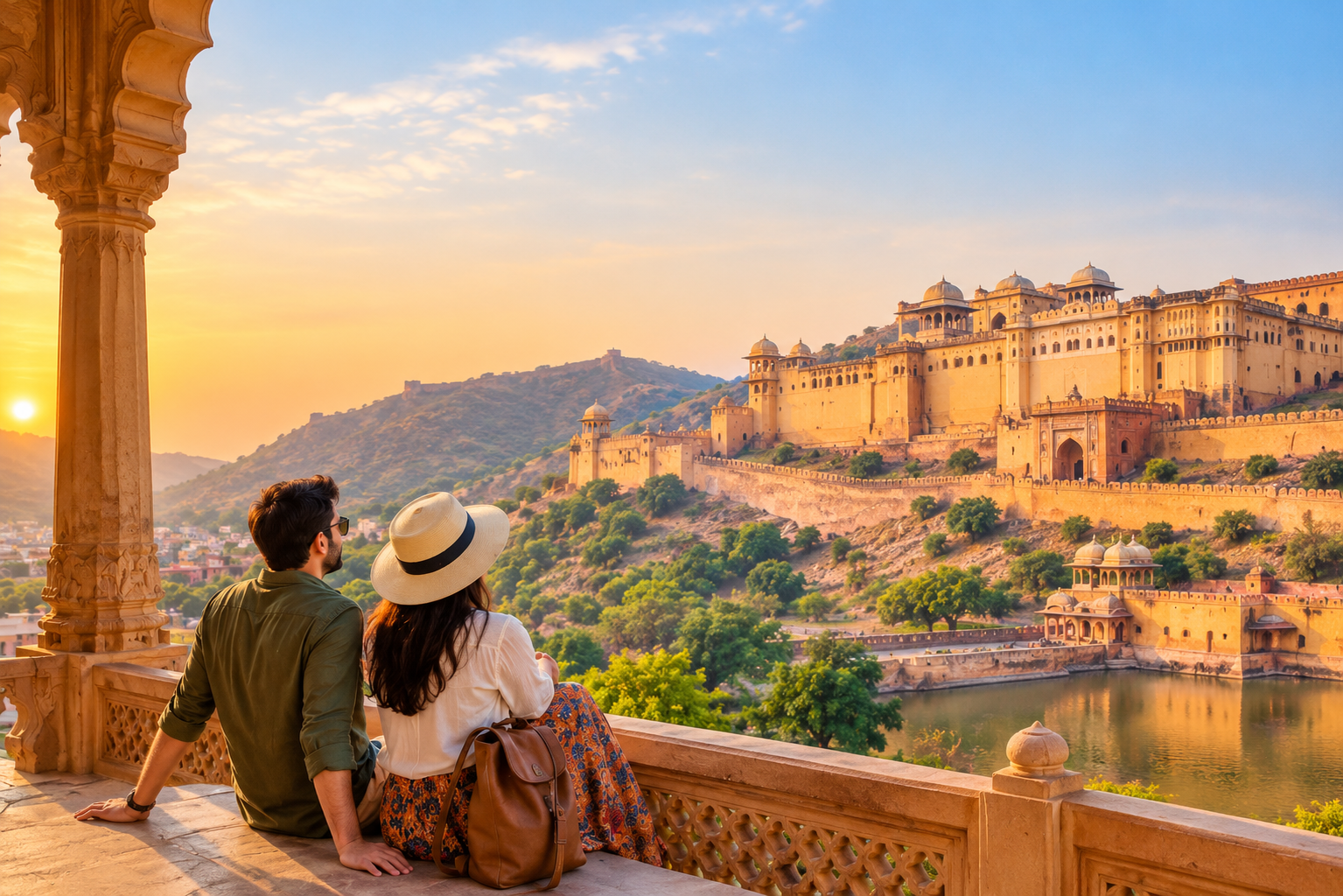
Most people start their Rajasthan trip in Jaipur, and honestly, it makes sense. The old city is pink, loud and full of colour. There are forts on the hills. Even a roadside chai stall looks good in a photo. But if it’s your first visit, it can get confusing quickly. What should you see first? How do you get around? And do you really need a guide?
“This Jaipur tour guide takes those questions one by one, so you can plan the trip without worrying.”
If you’re planning to explore Jaipur at your own pace, travelling with a private car and driver can make your sightseeing more convenient.
Jaipur at a Glance
Maharaja Sawai Jai Singh II founded Jaipur in 1727. Until then his court was at Amber, but he wanted a bigger capital, and a planned one. So he built a new city a few kilometres away, on a grid. The old part is called the Pink City, because a lot of its buildings are painted rose-pink.
I think UNESCO added Jaipur city to the World Heritage List in 2019. Two nearby places were already on that list earlier. Jantar Mantar was recognized in 2010 and Amber Fort in 2013 as part of the Hill Forts of Rajasthan. Jaipur is also the capital city of Rajasthan. That makes Jaipur a good base if one plans to visit cities, in Rajasthan later.
Places a First-Timer Should Not Miss
Amber Fort
Amber, sometimes spelled Amer sits on a hill about eleven kilometres from the city centre. Amber was the home of the Kachwaha rulers before Jaipur became the capital. Amber looks out over Maota Lake. Most visitors come to see the carved halls and the mirror work, the Sheesh Mahal. Arrive early, in the morning. By morning the courtyards become crowded and it is hard to enjoy the sights. Spend least a couple of hours. Amber has levels so you will likely wander longer than you expect.
Hawa Mahal
Maharaja Sawai Pratap Singh built Hawa Mahal in 1799. The sandstone front has five storeys and 953 small windows. The royal women used to watch the street from behind them without anyone seeing them. Since it faces east, morning light is better for photos. Most visitors stand on the road across, take a few pictures and go. Nothing wrong with that. Just look up for a minute before you leave.
City Palace and Jantar Mantar
These two are near each other, so do them together.
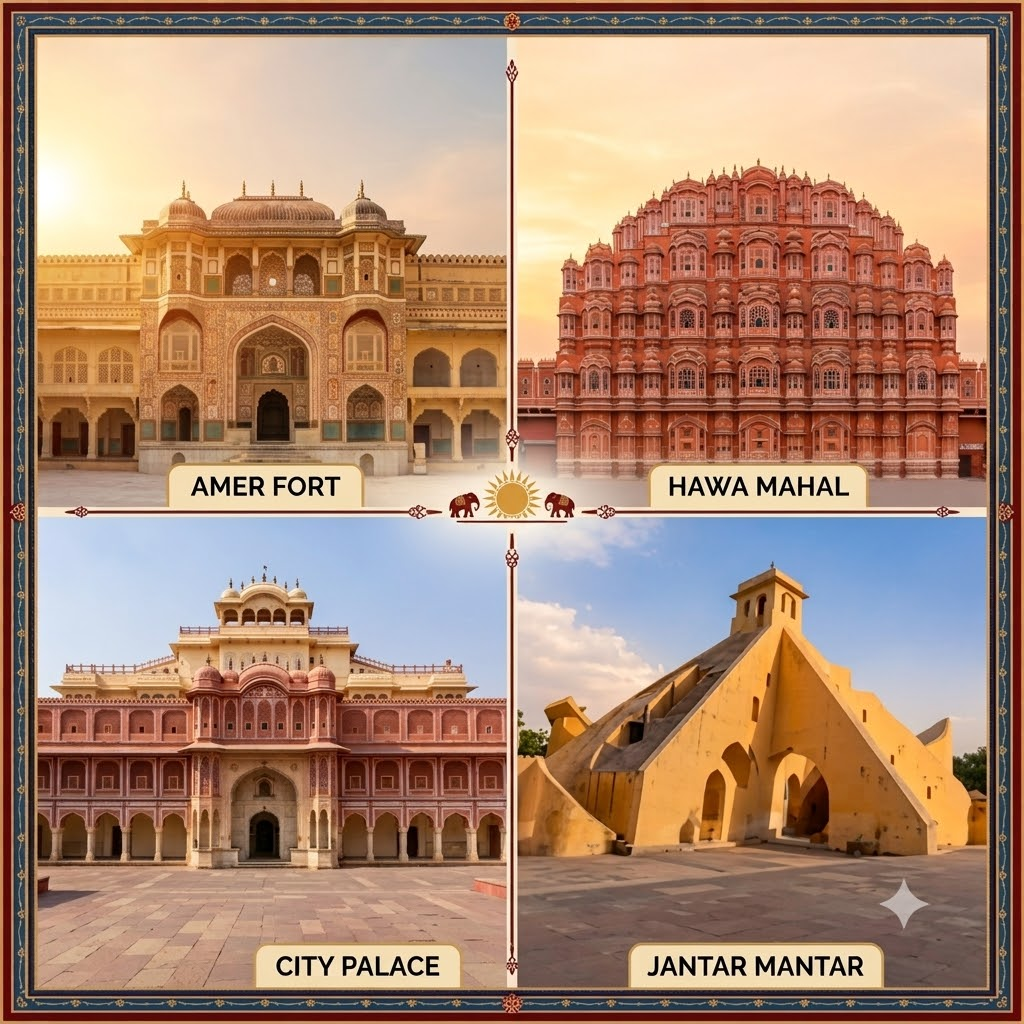
City Palace has Rajput, Mughal and European styles mixed in. A part of it is still the royal family’s residence, while the other part is a museum. Jantar Mantar was finished in 1734 and has 19 astronomical instruments, including the world’s largest stone sundial. Honestly, if no one explains them, the instruments look like strange stone shapes. With a guide, the same place becomes much more interesting.
Jal Mahal and Nahargarh Fort
Jal Mahal stands in the middle of Man Sagar Lake, on the road between the city and Amber Fort. You can only see it from the lakeside, so it’s a quick photo stop, nothing more. Nahargarh Fort is higher, up in the Aravalli hills. You get a wide view of the city from there, and late afternoon is the nicest time for it.
Why a Jaipur Private Tour Makes Sense
A Jaipur private tour is just a car and driver booked only for your group. People usually pick it for these reasons:
- The pace is yours. Stay longer where you like it, skip what you don’t.
- One car is with you the whole day. No looking for a ride at every stop.
- The driver knows the roads, and also which sights are best done in which order.
- The AC helps a lot in the heat, more so with children or elderly parents.
- If you want a shopping stop or a long lunch, you only have to ask.
Also, you can leave your bags and water bottles in the car when you go into the forts. After a few flights of stone steps, you’ll be glad about that.
How to Choose the Right Jaipur Tour Guide or Package
First, think about how many days you have. If you’re short on time in Delhi, a same day Jaipur tour from Delhi might be enough. If you have more days, Rajasthan tour packages let you add other cities. And when Jaipur is just one stop on a longer trip, check the Golden Triangle tour packages.
Before booking, look at these points:
- Inclusions. Ask what the price covers: car, driver, guide, entry tickets, parking. Get it in writing, because “included” can mean different things to different people.
- Vehicle size. Our vehicles start from a 4-seater Dzire/Etios and go up to an 18-seater Tempo Traveller. The seat numbers include the driver. For the current list, see the car rental with driver page.
- The guide. Ask if the guide is licensed, and if you can talk to them comfortably in your language.
- Reviews. Read the recent ones on independent sites. A company’s own page won’t give you the full picture.
- Flexibility. A clear plan is good, but you should still be able to change a stop on the day.
Best Time to Visit Jaipur
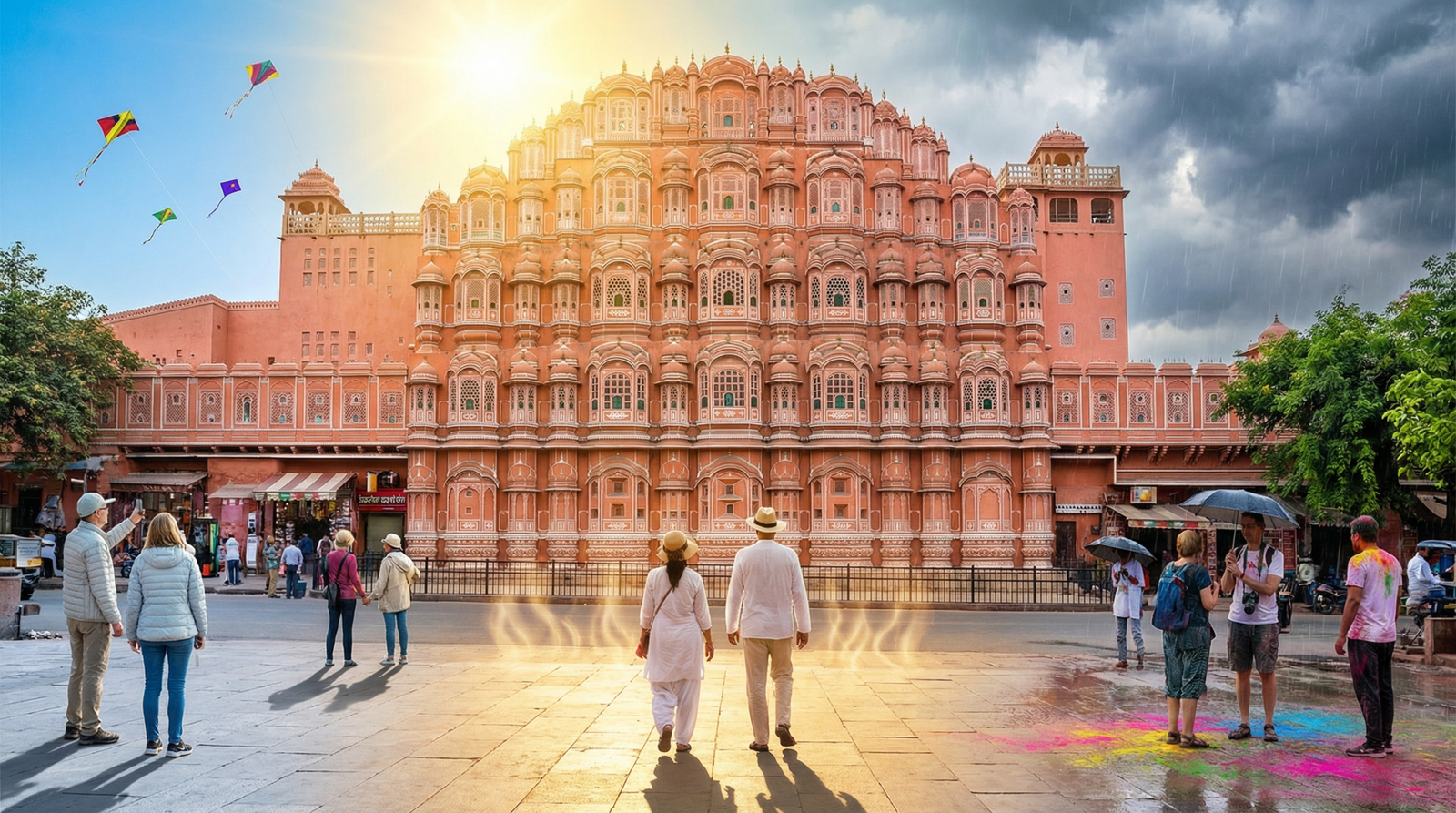
October to March is the season I believe. The days feel pleasant. You can walk around forts and bazaars without getting tired too quickly. During mid-winter the mornings and evenings can become cool so I suggest keeping a jacket. April to June becomes very hot. Temperatures can reach 40°C or more. It is best to do sightseeing in the morning or late afternoon and rest indoors during the hottest part of the day. In the monsoon from July, to September the hills look green. Rain and humidity are also present.
A Sample One-Day Plan
This is only a rough idea, not a fixed package. What you actually do will depend on your interests and on that day’s traffic.
- Morning: Amber Fort first, before the crowds.
- On the way back: A short stop at Jal Mahal for photos.
- Lunch: Somewhere in the old city. Try a Rajasthani thali.
- Afternoon: Hawa Mahal from the street, then City Palace and Jantar Mantar.
- Evening: Walk through the bazaars, or drive up to Nahargarh Fort for the view.
For the bazaars, most visitors go to Johari Bazaar and Bapu Bazaar. You’ll find jewellery, textiles and traditional footwear there. Prices in the smaller shops can often be bargained, so check a few places before buying.
Coming from Delhi? It’s roughly 280 km by road via NH 48, and the drive takes five to six hours each way, depending on traffic. You can do Jaipur in one day, yes, but it’s long and tiring. If you can spare a night, the trip becomes much easier.
Read Also: Top 5 Benefits of hiring a private car and driver in India
Final Thoughts
You don’t need a schedule to enjoy Jaipur. Pick a places start early and travel in a way that keeps you comfortable. Often the best moments aren’t planned all like chai at a corner stall or a sudden view, from a fort wall. A private car and a knowledgeable guide take away most of the stress. Then you can simply enjoy the city.
If you’d like help planning, contact our team with your dates and interests. You can also look at our tour packages page to see what’s available.
Frequently Asked Questions
1. How many days are enough for Jaipur?
If you only have one day, you can still see the main places. But two days is better. You get time for the bazaars, a proper lunch, and you’re not rushing from one fort to the next.
2. Can I do Jaipur as a day trip from Delhi?
You can, but it’s a long day. The road is about 280 km each way via NH 48, so a lot of the day goes in driving. Our website lists a same-day Jaipur tour from Delhi of about 15 hours. If you can stay one night, it’s much more relaxed.
3. Do I really need a guide in Jaipur?
Not really, it’s not compulsory. Still, a guide is useful at Amber Fort, City Palace and Jantar Mantar. Without someone explaining, a lot of the history and the instruments just go over your head.
4. What’s the best way to get around Jaipur?
For short rides, autos and app cabs work fine. But if you’re visiting many places in one day, a private car with a driver is easier. You don’t have to look for a ride every time you step out.
5. Is Jaipur a good choice for a first trip to India?
Yes, it is. It’s one of the most visited cities in the country, and many people begin their Rajasthan trip here. Just take normal care of your valuables, and sort out the tour details before you start.
